Exploring Trails in the Copper Canyon
SIERRA TARAHUMARA CULTURE and CANYON HIKING11 Day Trip, leaving by van from Tucson, AZ (6 nights Hotel/Guesthouse, 4 nights Camping- winter/summer hikes differ); |
CCT Hiking/Camping Departure dates
I want to go there, what's today's date?
- Day 1: Leave TUCSON 6am, Border crossing at Douglas, AZ/Agua Prieta, Sonora; 11 hours driving; arrive Cascada Basaseachi (Basaseachi guesthouse)
- Day 2: Long day hike to view Mexico's highest waterfall; 3-5 hrs hiking, 2-3 hours driving (Noritari guesthouse)
- Day 3: Easy day hike to lake (Noritari guesthouse)
- Day 4: Creel for maps/crafts, Divisadero for canyon views/Tyrolean traverse (Arepo guesthouse)
- Day 5: Hike to Rio Urique (Camping)
- Day 6: Long day hike from river (Camping)
- Day 7: Short day hike from river (Camping)
- Day 8: Begin Hike out of canyon (Camping)
- Day 9: Hike back to rim (Arepo guesthouse)
- Day 10: Leave early for Mata Ortiz pottery village, (demonstration at Mata Ortiz guesthouse)
- Day 11: Long drive to Tucson. Leave 7am, Arrive Holiday Inn & Suites 5pm
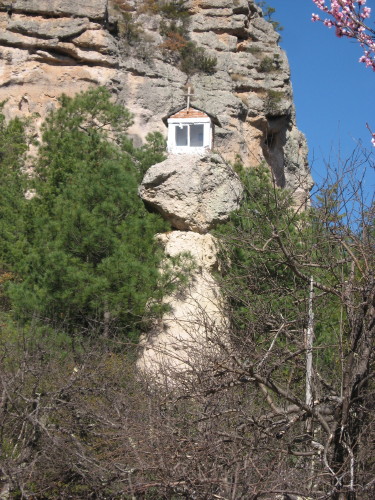
Our hike accompanied by burros begins on the less steep West side of the Divisadero ridge. It is a great hot weather alternative to the scorching Urique canyon bottom, and more inhabited
 |
Day One
Our trip starts at the Palo Verde Holiday Inn in Tucson. This hotel offers shuttle service to and from Tucson International Airport (TUS). We'll meet for breakfast at 6am, and depart for the border about 7am. Keep your passport handy- you'll need it at the border town of Agua Prieta, Sonora. We'll have lunch in Nuevas Casas Grandes about 3 hours down the road. Besides Tia Rosa's tacos and baked potatoes, this is also a good place to change money and gas up. We'll be back for the Mennonite colonias, the ruins of Paquime, and the pottery village of Mata Ortiz, but tonight it's on to Parque Nacional Cascada de Basaseachi. We want to get there by sunset. The sky is spectacular every night at 7000 feet elevation.
Day Two
We've got the day to hike the falls, top to bottom- overlooks, plunge pool, even the possibility of a visit to Mexico's highest waterfall Piedra Volada, although this hike is not for the squeamish. Ready? But bear in mind that Piedra Volada which enters Barranca Candameña from the left a mere 8 kilometers downstream with a single 1200 foot fall, is only visible during the rainy season.Then, we're off for our accommodations tonight in well appointed solar powered cabin tucked into a Sierra Madre forest. By now, you've noticed the change in the scenery. The roads get narrower and sinuous, and all sorts of impossibly decrepit vehicles are struggling up the hills in whatever gear they have left. The overwhelming shades of green dazzle the eyes. The Apachean Madrean woodland makes its appearance, with over 100 species of oak. We're deep in the sierras now; the pines start to predominate the landscape. (Noritari guesthouse)
Day Three
Relax a bit after days of driving with walking, birding, and good food. Tonight is a second night at this guesthouse, home to the annual Sierra Mushroom Festival, and our hostess is a recognized culinary master. (Noritari guesthouse)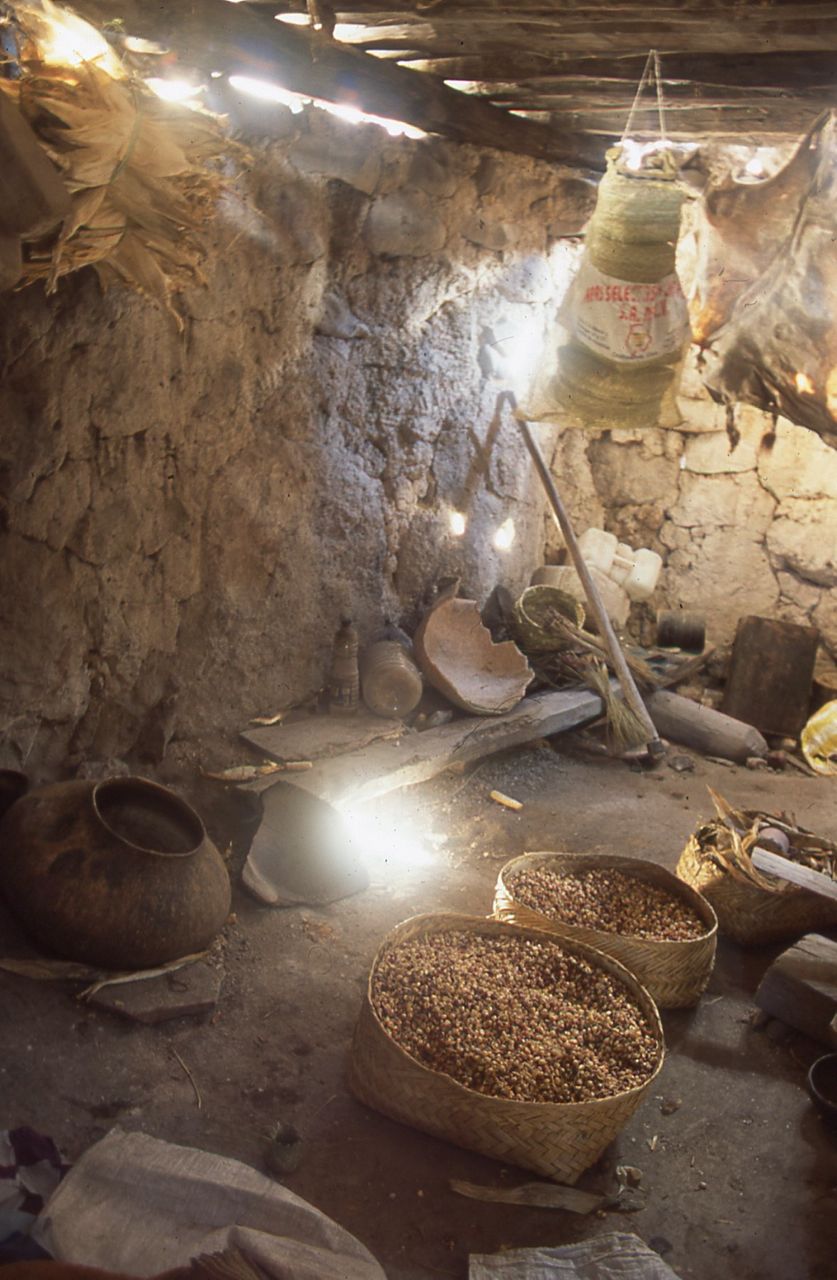 |
CANYON RIM PANORAMIC VISTAS
Day Four
We continue our journey with a stop in the logging railhead town of Creel. The Mission Store offers a unique opportunity to purchase topographic maps, indigenous music, or books about the area. By midday, we'll be at the rim of the Copper Canyon - Barranca del Cobre. We'll be met at the local guesthouse by our hosts Lola and Guillermo, whose parents settled these parts when they helped build the railroad. The railroad called the Chihuahua al Pacifico was an engineering marvel when it started running in the 1960's. Begun in the early 1900's it proceeded in fits and starts over the decades. Once completed, passengers and cargo crossed 37 bridges and traversed 88 tunnels as the train left the port of Topolobampo, Sinaloa, for the Texas frontier in Ojinaga, Chihuahua over 600 km away. The tracks wrap around the little village or Areponapuchi and most time is kept here by train arrivals and departures. We can finally relax after enjoying a late lunch. Toward sunset we'll entice their son Memo, a third generation Mancinas involved in tourism, to take us to the canyon rim for a walk. It will take your breath away; not just the scenery, but the lack of air at 7000 feet above sea level. Canyon rim rendezvous begins here with a night at Lola's (Arepo guesthouse).Day Five
We meet our local guides and burro drivers locally called arrieros. Once our gear is securely lashed down, we'll start our hike beginning with a long gentle descent, and ending in a pastoral valley for lunch. Our guide Jilo's dad homesteaded this rancho named for an apple orchard (Manzano) when he was working on the railroad. (Camping) We continue past small homesteads nestle in valleys between canyon narrows. You might see a Tarahumaran splitting cedar shingles for a roof, or plowing his tiny, rocky field with a wooden plow pulled by a cow or two. Typically, oak plowshares are hardened in a fire; so are the oak wedges used to split shingles using hand fashioned mallet or an axehead passed down for generations. Granaries (cascomates), and pictographs give evidence that these locals weren't the first to inhabit these fertile fields. Not far away, weird rock formations stand sentry over our campsite that night under a brilliant canopy of stars, satellites, planets and meteors.Day Six
We arrive at the river high up (5500ft) on its journey to the sea. Enjoy hiking and swimming. (Camping)Day Seven
We leave the river at a narrows. This is the starting point for the challenging canyoneers' route downstream. The river descends abruptly through a tumultuous boulderfield, while we traverse and begin the ascent. We arrive early in a remote village inaccessible by vehicle. A small church maintains the Tarahumarans' link to the Catholic religion, and functions as their social center for festivities. Fortunately for us, these normally shy villagers have begun looking forward to our arrivals. (Camping)Day Eight
 |
Day Nine
Arrive at guesthouse for lunch. (Arepo guesthouse)Day Ten
Leave 7am for Mata Ortiz, with a lunch stop for famous tacos, Mexico's fast food fascination, Arrive Mata Ortiz for a full pottery demonstration and opportunity to buy museum quality pottery. (Mata Ortiz guesthouse)Day Eleven
An early breakfast makes for an early departure, and it's a long way back to Tucson. (Palo Verde Holiday Inn, Tucson.)Day Twelve
Fly Home